
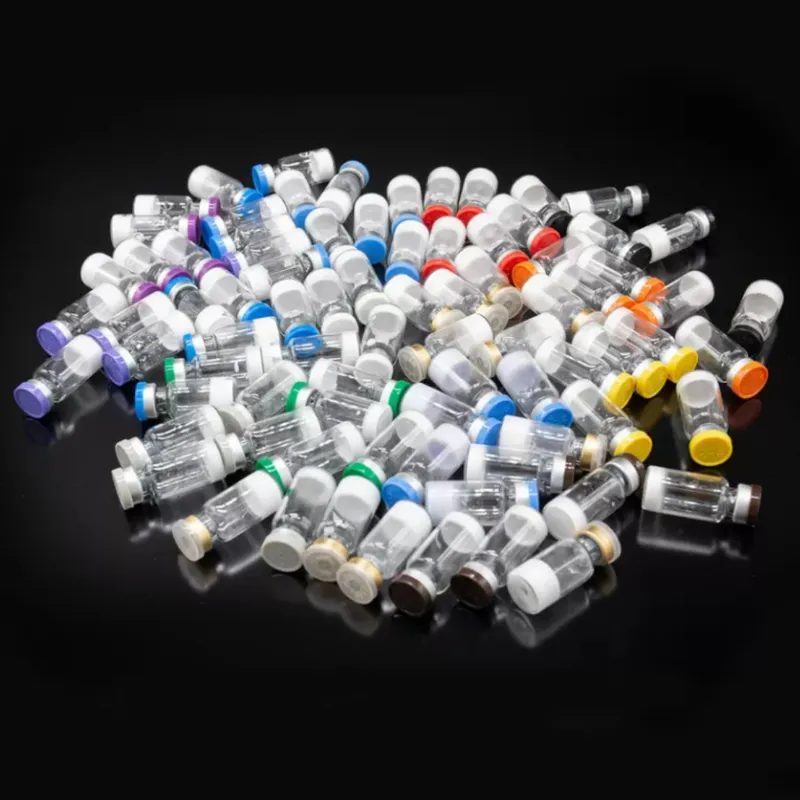
Ipamorelin and Tesamorelin: Growth Hormone Peptides Explained
The study of growth hormone-releasing peptides offers a fascinating and vital window into the complex regulatory networks of the human endocrine system. These specialized compounds are designed to interact with the body’s natural pathways for producing and secreting growth hormone (GH), making them invaluable tools for researchers. We see them as essential for scientists exploring the frontiers of physiology, metabolism, and cellular repair.
This article provides a focused, in-depth exploration of two key subjects of scientific inquiry in this class, Ipamorelin and Tesamorelin. We believe that for any serious researcher, understanding these differences is essential for designing precise, effective experiments that produce clear, interpretable data.
A Brief History and Evolution
The quest for compounds that could modulate growth hormone began decades ago. The first generation, like GHRP-6, was groundbreaking but came with significant drawbacks, most notably a strong induction of hunger and a pronounced release of cortisol and prolactin. The second generation, including GHRP-2, refined the process but still carried a notable effect on cortisol and prolactin.
Ipamorelin represents the third generation, a significant leap forward in specificity. It was developed with the explicit goal of retaining the potent GH-releasing effect while eliminating the unwanted side effects on other hormones.
Tesamorelin, on the other hand, evolved from research into natural GHRH, with the goal of creating a more stable and effective analog that could better mimic the body’s own signaling. We feel this historical context is crucial for appreciating the refined nature of these modern research tools.
The Growth Hormone Axis
To understand these peptides, we must first look at the body’s elegant system for regulating growth hormone, the hypothalamic pituitary somatotropic (HPS) axis.
- The “Gas Pedal” (GHRH)
The hypothalamus produces Growth Hormone-Releasing Hormone (GHRH), which signals specialized cells in the anterior pituitary, called somatotrophs, to release GH.
- The “Brake” (Somatostatin)
The hypothalamus also produces somatostatin, which inhibits GH secretion, helping regulate a natural pulsatile rhythm that balances release and prevents continuous stimulation.
- The “Alternate Signal” (Ghrelin)
Ghrelin, a peptide hormone generated in the stomach, also potently stimulates the pituitary to secrete GH by binding to its own distinct receptor, the GHSR-1a.
- The Negative Feedback Loop
High levels of GH and its primary mediator, Insulin-like Growth Factor 1 (IGF-1), signal the hypothalamus to reduce GHRH and increase Somatostatin, thus turning down GH production.
Modern growth hormone-releasing peptides are synthetic molecules designed to interact with this system by mimicking the action of either GHRH or ghrelin.
Ipamorelin, the Selective Secretagogue
Ipamorelin is a pentapeptide and a highly selective ghrelin mimetic. Its primary mechanism involves binding to and activating the ghrelin receptor (GHSR-1a) in the pituitary and hypothalamus. This binding event triggers a strong, clean pulse of growth hormone secretion. We know its high degree of selectivity is what makes it such a valuable research tool.
The key advantage of Ipamorelin in a research setting is its specificity. It stimulates GH release with minimal to no effect on cortisol, prolactin, or aldosterone. This “clean” pulse ensures that observed effects are not a result of confounding variables from other hormonal shifts. Because of this, studies requiring precise GH elevation often use high-purity Ipamorelin to ensure data integrity and avoid misinterpreting results.
Tesamorelin, the Stabilized Analog
Tesamorelin operates through a completely different and more biomimetic mechanism. It is a highly stable synthetic analog of the body’s own GHRH. It consists of the same 44 amino acid chain as natural GHRH, but with a trans-3-hexenoic acid group attached to the N-terminus.
We believe this structural change is the key to its enhanced profile. This modification makes Tesamorelin resistant to the enzyme dipeptidyl peptidase-4 (DPP-4), which rapidly degrades natural GHRH. This gives it a longer half-life and a more stable presence in circulation.
It works by binding directly to GHRH receptors on pituitary somatotrophs, stimulating GH synthesis and secretion in a manner that mimics and amplifies the body’s natural, rhythmic pulse. The focus of tesamorelin for research has often been its effects on metabolism, making it a powerful tool for studying the GHRH pathway.
Frequently Asked Questions
What is the main difference between Ipamorelin and Tesamorelin?
The main difference is their mechanism of action. Ipamorelin is a ghrelin mimetic that activates the ghrelin receptor (GHSR). Tesamorelin is a GHRH analog that activates the Growth Hormone-Releasing Hormone receptor (GHRH-R). They stimulate GH release through two distinct and complementary pathways.
Why is Tesamorelin considered a more 'biomimetic' GHRH analog?
Tesamorelin is considered biomimetic because it works by enhancing the body’s natural GHRH signal and preserving the natural, pulsatile rhythm of GH release. Its modification simply makes it more stable in the body, allowing it to interact with the GHRH receptor for a longer period than natural GHRH.
Why is Ipamorelin's selectivity for the GH axis important in research?
Ipamorelin’s selectivity is crucial because it allows researchers to learn and study the effects of elevated growth hormone in isolation. By not affecting cortisol or prolactin, it ensures that the observed results are due to the actions of GH and IGF-1, not a complex mixture of hormonal changes, which simplifies data interpretation.
What are these peptides typically used for in a lab setting?
In laboratory settings, these peptides are used to study the effects of elevated GH and IGF-1. Extensive tesamorelin research has focused on its impact on visceral fat, lipid profiles, and glucose metabolism. Ipamorelin is used in studies looking at body composition, bone mineral density, and cellular repair processes.
Why are they called growth hormone-releasing peptides?
They are called growth hormone-releasing peptides because their primary and defining function in a research context is to stimulate the pituitary gland to release stored growth hormone. They are tools designed specifically to interact with and activate this physiological pathway for detailed scientific study.
Comparative Analysis: Ipamorelin vs. Tesamorelin
To assist researchers, we’ve compiled a direct comparison of these two peptides
| Feature | Ipamorelin | Tesamorelin |
|---|---|---|
| Class | GHRP (Ghrelin Mimetic) | GHRH Analog |
| Mechanism | Activates GHSR-1a Receptor | Activates GHRH Receptor |
| GH Pulse | Strong, Sharp, Immediate | Rhythmic, Natural, Amplified |
| Half-Life | Short (~2 hours) | Longer, more stable |
| Selectivity | Very High (GH only) | High (Acts on GHRH pathway) |
| Cortisol Effect | Negligible | Negligible |
| Primary Focus | Acute GH pulse, bone/collagen | Metabolic health, visceral fat |
What Researchers Study After the GH Pulse
While the primary function of these peptides is to stimulate growth hormone release, the true focus of research lies in the downstream effects mediated by GH and its primary signaling molecule, Insulin-like Growth Factor 1 (IGF-1). We understand that for scientists, the GH pulse is just the starting point; the real focus lies in observing and quantifying the downstream physiological changes that follow.
The elevation of GH and IGF-1 initiates a cascade of events that are studied across various cell types and tissues:
Anabolic Effects in Muscle
Researchers often use these peptides to study myogenesis, the formation of new muscle tissue. Elevated IGF-1 levels are known to stimulate satellite cell proliferation and differentiation, as well as enhance protein synthesis within existing muscle fibers, supporting muscle repair and growth. This makes these compounds important tools for investigating models of sarcopenia and cachexia, where muscle loss and impaired regeneration are key features.
Lipolytic Effects in Adipose Tissue
Growth hormone acts as a strong lipolytic factor, prompting fat cells to convert stored triglycerides into free fatty acids and glycerol through lipid breakdown, which are then released into the bloodstream for use as energy.
This mechanism is a key reason why tesamorelin for research has been so focused on visceral fat reduction, as it allows scientists to study the specific impact of the GH axis on the body’s most metabolically active fat deposits.
Bone and Connective Tissue Remodeling
Another critical area of study is the effect of GH/IGF-1 on the skeletal system. IGF-1 stimulates the activity of osteoblasts, the cells responsible for forming new bone tissue. Simultaneously, it promotes the synthesis of collagen, the primary structural protein in skin, tendons, and ligaments. This has led to research applications in fracture healing and osteoporosis models.
The Scientific Rationale for Synergy
One of the most advanced areas of study involving these compounds is the investigation of their synergistic action. When used together, a GHRH analog like Tesamorelin and a ghrelin mimetic like Ipamorelin produce a release of growth hormone that is significantly greater than the sum of their individual effects.
The biochemical reason is fascinating. They use different intracellular signaling pathways:
- Tesamorelin (GHRH-R): Activation primarily increases intracellular cyclic AMP (cAMP).
- Ipamorelin (GHSR): Activation primarily works by increasing intracellular calcium (Ca2+).
These two distinct signals converge on the final step of GH secretion, the exocytosis of GH-containing vesicles, in a synergistic fashion. For a researcher, this allows for the study of the pituitary’s maximal secretory capacity. We see this as a sophisticated model for understanding pituitary health, and the use of these combined growth hormone-releasing peptides represents a frontier in endocrinological research.
Expanding Research with Complementary Compounds
To build a complete physiological model, scientists must investigate compounds that influence the body through different means. Comparing the effects of growth hormone-releasing peptides to other molecules provides invaluable context.
For instance, research into muscle wasting sometimes involves selective androgen receptor modulators (SARMs). These compounds are investigated for their potential to selectively target androgen receptors in muscle.
A commonly studied example is Ostarine, which allows scientists to explore anabolic pathways in a non-steroidal context, providing a useful comparison to the systemic anabolic effects of GH.
Exploring Other Metabolic Pathways
Other avenues of metabolic research focus on cellular energy expenditure and fatty acid oxidation. This field of study includes compounds known as PPARδ (Peroxisome Proliferator-Activated Receptor delta) agonists. These agonists are used to explore how the activation of the PPARδ pathway influences cellular energy and mechanics.
Research chemicals such as Cardarine are often used to investigate effects on endurance and metabolic function, providing a different angle on body composition compared to the endocrine-driven mechanisms of growth hormone-releasing peptides.
The Absolute Necessity of Purity and Lab Protocol
The reliability of your research hinges entirely on the quality of your materials. An impurity, even a small one like a diastereomer or a truncated sequence, can have its own biological activity, leading to incorrect data. We know this is a risk no serious researcher can afford.
That is why we believe in absolute transparency through third-party testing. Every batch must be verified using High Performance Liquid Chromatography (HPLC) for purity assessment and Mass Spectrometry (MS) for identity confirmation. Proper laboratory protocol is paramount.
- Reconstitution
Lyophilized peptides should be reconstituted by gently introducing a solvent (like bacteriostatic water) and allowing the powder to dissolve via gentle swirling. Vigorous shaking can denature the peptide. This step is critical for preserving molecular integrity and ensuring consistent activity in subsequent experimental use.
- Storage
In their lyophilized state, peptides are stable for months or years when stored in a freezer. Once reconstituted, they are far more fragile and must be kept refrigerated and protected from light, typically for only a few weeks, as degradation accelerates once the peptide is in solution.
- Handling
Always use sterile techniques when handling vials to prevent contamination. The integrity of your entire experiment depends on these meticulous steps. We see this commitment to quality and protocol as the foundation of good science, where even minor handling errors can significantly affect experimental reliability, a hallmark of professional-grade growth hormone-releasing peptides.
The Future of Endocrine Research
In summary, Ipamorelin and Tesamorelin are growth hormone-releasing peptides but fundamentally different tools. One offers a clean, sharp pulse of GH via the ghrelin pathway, ideal for studying acute responses. The other provides a stable, biomimetic amplification of the natural GHRH pathway, perfect for long-term studies on metabolic health. They are not interchangeable.
We believe the future of endocrinological research lies in using these sophisticated tools with a clear understanding of their unique properties. By selecting the right peptide, researchers can ask more specific questions and unlock deeper insights into human physiology. When your work requires the highest standards of purity for clear, unambiguous results, you can explore our verified research compounds available at Innovative Peptides.

